
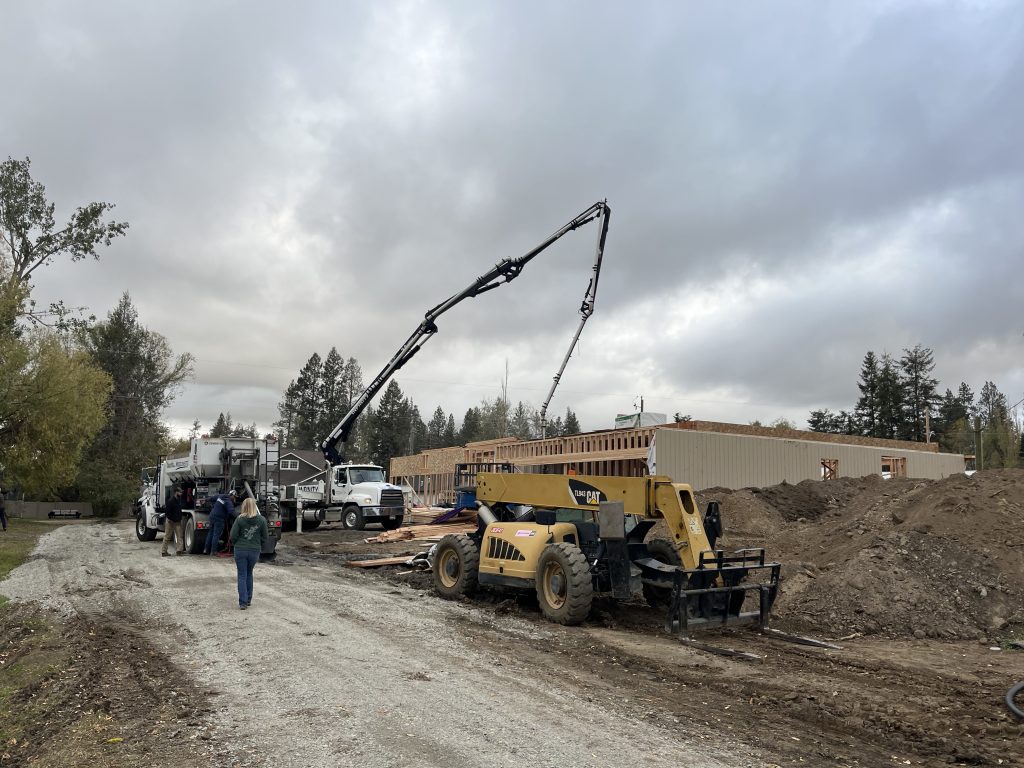
In part 2 we talked about all of the prep work we did to get these lots ready. Today, we get into the fun stuff! The pivot to build a couple of duplexes and the muddy reality of installing utilities in the fall & winter months in Rockford Washington.
The “No-Brainer” Pivot
We mentioned in previous posts that we spend a lot of time talking to the city/towns as we put our projects together. There’s a tremendous amount of red tape involved with most of them, and there’s information to be had. This case was no different.
While red tape is less common in small satellite towns and communities like Rockford, it’s still really important to plan properly and understand what you need to do to make the project happen.
We’d initially planned to build three single family homes for resale. We stick to single level, sub-1500 square feet homes with three bedrooms and two bathrooms. We can build these homes and sell them quickly and they provide a nice, affordable option for buyers in that price range. We’d done similar infill projects around town, and had a couple of nice plans we were contemplating.
After a few conversations with the Town we were told that the zoning supported one and two family dwellings. Two family dwellings are more commonly referred to as duplexes. This was very intriguing. Duplex lots are in high demand around Spokane County (everywhere really, as density becomes more common and important). With this high demand comes great expense. Our entry price on the lots was less than a fifth of what it would take to purchase a duplex lot in the Spokane Valley. We quickly decided we needed to move in this direction, for at least two of the lots (more on this later).
We’d long had our eye on a couple of nice duplex floor plans. These plans were appealing because they would comfortably fit on a fifty foot wide lot and comply with ordinary setback requirements in the area (these setbacks later changed in Rockford FYI).
For maximum compatibility and value to tenants, we prefer three bedroom and two bathroom rental units. We find, for our model, that we can get predictable rent, and the home provides a good space for our tenants. These floor plans consisted of three bedrooms and two and a half bathrooms. Perfect! Storage is also important, which is why we chose plans with two car garages. Not because people park their cars in the garage (don’t be silly!), but because people store their stuff in the garage. Storage is a big expense for many tenants, and if you can provide good storage space, your units can (and will be) more appealing to those who need it. You’ll also still be a hero to the occasional outlier who parks in the garage instead of filling it to the brim with boxes.
With our plans in mind, we needed to get to work on the infrastructure.
The Sewer Saga
Sewer and water ran down the street directly north of our lots. The lots are situated on the corner of two streets, and our frontage street did not have any utilities in-ground. We needed five new water and sewer connections (two for each duplex, and one for the single family we were building). While there were probably ways to create utility easements and run sewer connections down an alley or through backyards, we (the Town included) felt it would be better to extend the utilities down the street in front of the new builds.
The sewer and water needed to be extended down the street, a hundred feet give or take. I actually forget the official distance. The sewer required the installation of two manhole wells, and significantly deep trenching. The installation of the sewer went in quite well, uneventful in fact and the title of a “saga” may be a little misleading (ha!).
We did run into some frustrating, and at times comical issues with mud.
The ground in Rockford and much of the surrounding area contains a lot of blue clay. When you mix freshly disturbed topsoil, clay, water, and a barrage of traffic from contractors the resulting mud is relentless.
I’m sure there were more complaints to the town than they passed along. At one point, we had a Telehandler stuck halfway up the wheels. Not a good look.
Shut Down!
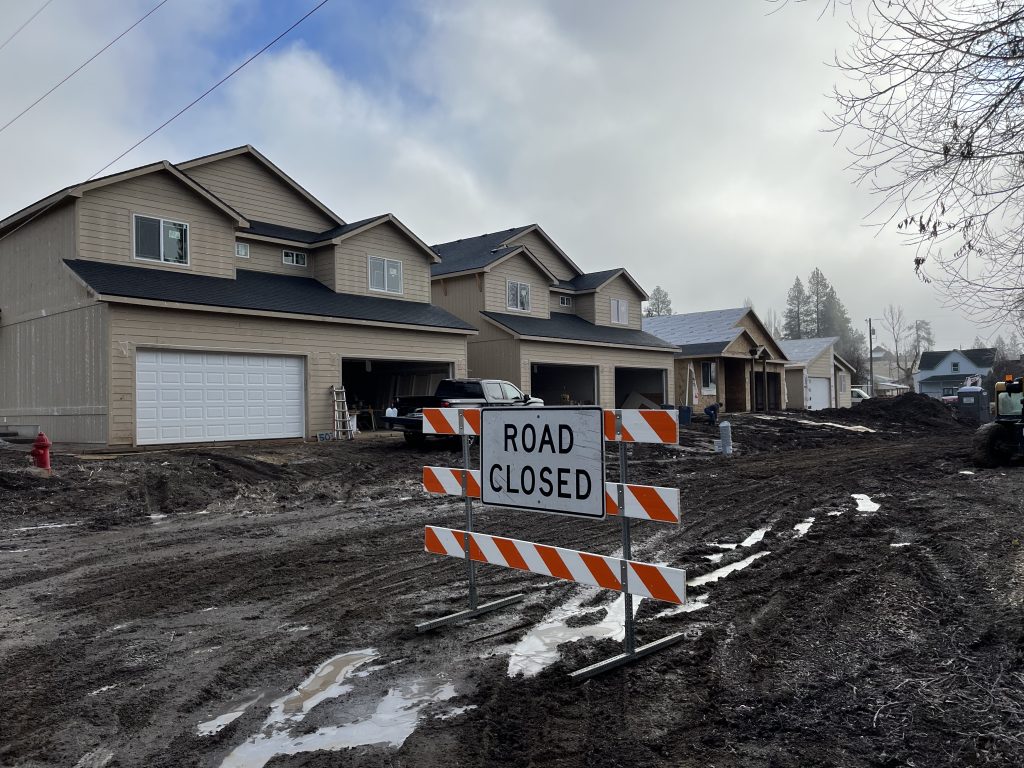
This is all very comical in hindsight, and I’m sure was very frustrating in town. No amount of applied rock would have solved this problem, and we had (and have been having) wetter rather than colder winter weather. Moisture upon moisture with no end in sight. Rock would essentially disappear into the muddy bowels of the Earth upon liberal application.
More than once, we had to pull one of our trucks out of the muddy grips using a long tow strap or chain (with the other truck perched safely on the side street).
Alas the infamous “Road Closed” sign appeared stopping any brave souls from venturing down the road.
Hindsight is always 20/20
Looking back, the mud was comical, part of the game I guess. The weather ultimately changed, we graded the road, added ditching and a fresh, new, top course of gravel. All is well, and the mud monster has not returned since.
The biggest lesson? We’d been thinking small. In the final part of this series, we’ll show you the finished units, talk about the tenants who moved in immediately, and discuss why we’d do it all over again, but with one major change.